
A blue sign, a straight line as far as the eye can see, and that doubt that creeps in: do scooters and departmental roads really mix well? The numbers don’t lie: every year, thousands of riders question the limits of their two-wheelers on these sometimes hostile routes.
What the law says about riding a scooter on a departmental road
Riding a scooter on a departmental road is not illegal, as long as one strictly adheres to the highway code. 50 cc scooters, limited to 45 km/h, venture there quite legitimately, unless a prohibition sign or a local decree imposes a specific restriction. A symbol, a simple mention, and the right of way can disappear. Some sections adopt their own rules, dictated by safety criteria or obligations regarding minimum speed.
On the other hand, highways and fast lanes are off-limits for two-wheelers under 50 cc. On a departmental road, legality is obtained if the vehicle is compliant and insured; any negligence, whether regarding equipment or motorcycle insurance, immediately exposes one to severe administrative sanctions, ranging from loss of points to suspension of the license. There is no tolerance on these aspects; checks are frequent and uncompromising.
It can sometimes be difficult to navigate through all the rules and exceptions. Hesitant riders multiply their searches, looking for the loophole or the confirmation that reassures them. Restricted power, mandatory equipment, presence of more powerful vehicles: heightened vigilance is required on every journey on these roads where speed and diversity reign.
Lane splitting: what are the rules for scooters on these roads?
Lane splitting, this very urban habit among motorcyclists, is not permitted on departmental roads. Outside the city, this practice remains marginal and almost always prohibited, sometimes reserved for certain routes being tested on ring roads or some fast routes.
On a departmental road, passing between cars is only accepted in very rare exceptions, which are always notified by decree. Narrow lane widths, changing visibility, dense traffic: risks accumulate quickly, relegating lane splitting to a nearly systematic prohibition. The instruction remains the same: stay in your lane and be extra cautious at the slightest slowdown, maintaining an appropriate speed.
Of course, the temptation to accelerate when traffic comes to a standstill is real. But the penalty never takes long to arrive: fines, point deductions… safety always takes precedence. On these roads, patience remains the best ally for riders.
To guard against unpleasant surprises, keep these few rules in mind:
- Respect the specific signage for each section; no sign should be overlooked.
- Maintain a sufficient safety distance at all times.
- Avoid using the emergency lane unless absolutely necessary.
On departmental roads, caution is non-negotiable. It acts as an invisible but crucial protection.
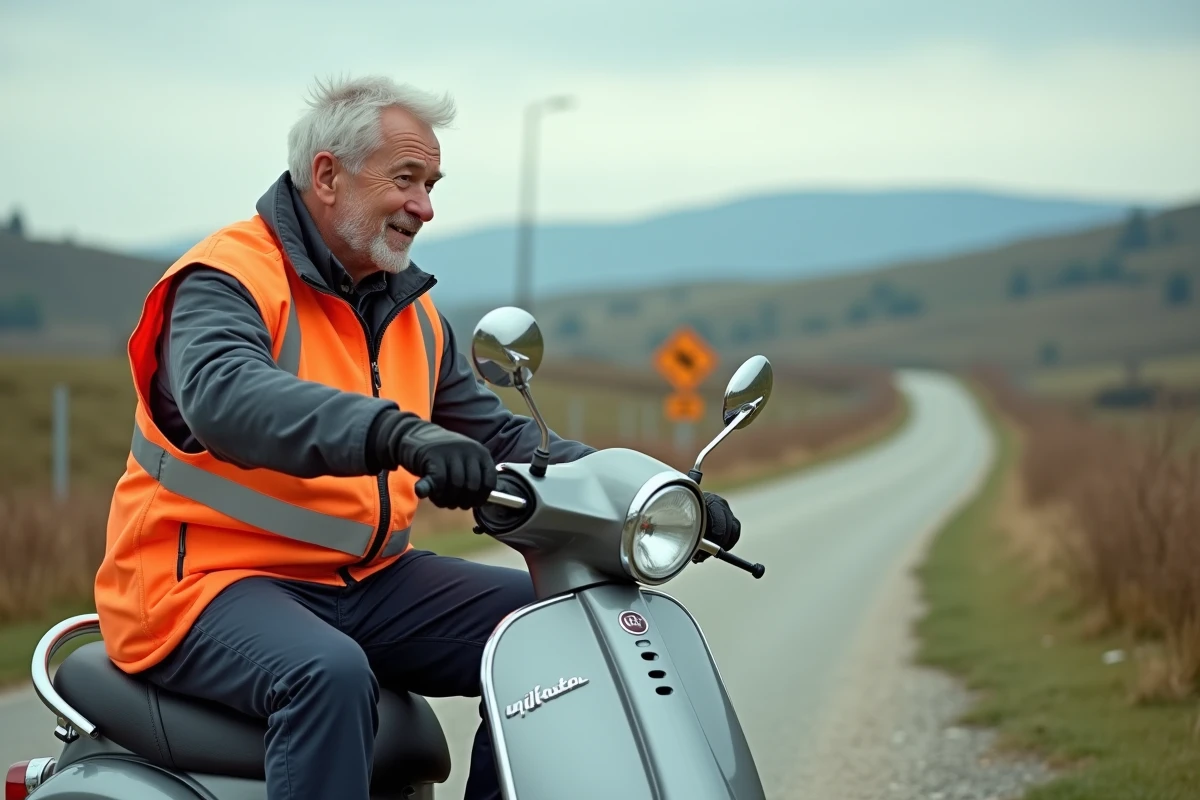
Practical tips for riding safely on departmental roads on a scooter
Hitting the road is not just about turning the key. It’s about checking every detail: equipment, weather, condition of the two-wheeler. A certified helmet, always securely fastened, is a must. Certified gloves are the minimum protection, beyond the legal requirement. Enhance your outfit with a suitable jacket and high-top shoes to avoid injury from the slightest slip.
Departmental roads sometimes encourage increasing speed, but every speed limit sign deserves to be taken seriously. Risk of rain, tight turns, or unexpected gravel force you to ease off the throttle and increase concentration.
Your motorcycle insurance must cover trips on departmental roads, including accidents or collisions. The slightest oversight can change everything during a simple check.
Here are the habits to incorporate into your routine before each departure and during the journey:
- Check your tires and brakes methodically before hitting the road.
- Keep your lights on, even in good weather, to be seen by everyone.
- Always maintain a buffer, anticipating the sometimes unpredictable reactions of other road users.
Every meter traveled on a departmental road comes with its share of uncertainties. Taking the handlebars means accepting this balancing act between freedom and vigilance. It’s up to each rider to tame the road so that the next ride remains synonymous with pleasure rather than regret.