
A clogged sink trap frequently raises questions about the coverage of repair costs. The law distinguishes between routine maintenance, which is the tenant’s responsibility, and major repairs, which fall to the landlord. However, the line between these two responsibilities can be confusing, especially when the source of the blockage is not obvious.
Divergences also arise depending on the initial condition of the property or the age of the installations. Exceptions exist, particularly if the problem results from a construction defect or abnormal wear. The procedures and recourse vary depending on the situation and the exact nature of the incident.
Clogged sink trap: understanding the distribution of responsibilities between tenant and landlord
A clogged trap is not uncommon, and this is often where the question of responsibilities arises. On one side, daily maintenance: unscrewing the trap, removing clumps of hair, or rinsing the pipes, all of this falls to the tenant. This is the letter of decree no. 87-712 of August 26, 1987: each occupant must ensure the plumbing is in good condition over the weeks. These simple yet necessary actions are part of rental life.
But when the breakdown occurs due to the age of the installations, a faulty assembly, or a hidden defect from the start, then the situation changes. A trap that breaks for no reason, pipes worn by time, seals that no longer hold: all of this is the landlord’s responsibility. To determine who is responsible, one must return to the facts, often with supporting evidence: photos, inventory reports, and sometimes even a plumber’s report can clarify the situation.
sink trap tenant or landlord: this dilemma regularly arises in discussions between landlords and tenants. In the face of a blockage, the first question to ask concerns the origin of the problem. If residues or hair accumulate, the solution is in the tenant’s hands. If, on the contrary, the plumbing shows serious signs of fatigue, it is the landlord’s turn to step in. This distinction is not just a legal point: it applies every day in rental relationships.
Who should pay for the repair? Criteria to determine who bears the burden
The regulations, with the decree of August 26, 1987, are clear on this point: the routine maintenance and unblocking of the sink trap are the tenant’s responsibility. A blockage due to normal use, such as hair, soap, or food residues, falls under their responsibility. Cleaning, disassembling, rinsing: these are daily tasks, easily managed with household products, a bit of vinegar, baking soda, or hot water.
But the situation shifts as soon as the cause of the malfunction goes beyond normal use. A part that breaks due to age, an inaccessible pipe, or a faulty installation: these cases fall to the landlord. Changing an old trap, repairing what time has damaged, is their responsibility.
Some criteria to decide
Here are the points to examine to resolve the question:
- Origin of the blockage: is it due to ordinary use or unusual degradation?
- Age of the plumbing: is the installation at the end of its life or recent?
- Is there a construction defect or proven advanced wear?
Often, only a professional can determine the responsibilities. Their diagnosis, in black and white, then serves as a reference. If a tenant neglects maintenance, the security deposit may be called into play. But without proof of a shortcoming, a structural repair cannot be demanded lightly.
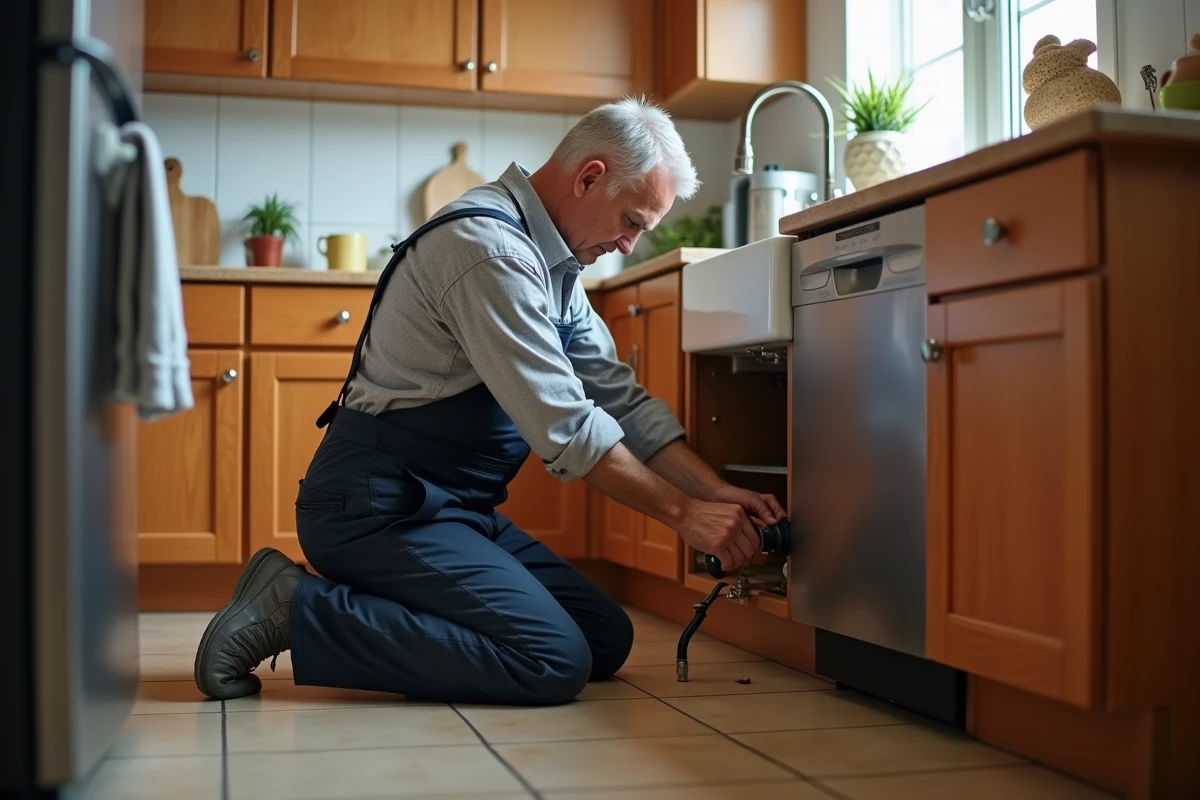
What to do in case of disagreement or complex situation: possible steps and recourse
When a clogged trap becomes the starting point of a conflict, it is essential to start gathering concrete elements: photos, written exchanges, or a bailiff’s report constitute useful pieces of evidence to clarify the cause of the blockage. If necessary, a plumber can provide a detailed report: wear and tear, lack of maintenance, potential workmanship issues. This document often serves as a reference when distributing costs.
In case of a stalemate, it is possible to send a formal request, via registered mail, to demand coverage of the repairs. If there is no agreement, the departmental conciliation commission can be seized. This free solution allows tenants and landlords to meet with a neutral mediator to try to find common ground.
If dialogue is insufficient, the last resort is through the local court. There, the judge decides based on the evidence, the diagnosis, and the regulations. It is safe to say that it is better to prioritize discussion, mediation, and transparency to prevent the issue of a simple trap from poisoning the rental relationship. Because behind every clogged pipe, there are primarily two people who can, with a little goodwill, find a solution without wasting their time or losing their calm.