Insufficient compaction increases the risk of premature settling tenfold, even on surfaces designed to support heavy loads. The thickness of the layers influences the final stability more than the type of gravel, contrary to popular belief.
Some models of vibrating plates can weaken the base if not properly adjusted, while a simple manual roller, when used correctly, optimizes long-term resistance. The effectiveness of compaction depends directly on the choice of tools, grain size, and moisture content, much more than the weight applied on the surface.
Why gravel stability makes all the difference for your landscaping
Soil stability: the key to any sustainable project, whether it’s a driveway, a patio, or a pathway. Poorly prepared soil cracks, sinks, and threatens the integrity of the entire structure, even the most carefully constructed one. The consequences are visible on the ground: ruts forming, poor drainage, edging that tilts. Soil preparation precedes every step, as it conditions the success of the entire project.
Choosing the gravel is never enough. Compaction requires method and rigor. It is in the layering, in selecting an appropriate grain size, that the difference lies between a simple deposit and a solid base. Professionals favor a precise moisture content that promotes particle cohesion. Too dry, the soil crumbles. Too wet, it settles under the first load.
To ensure stability, rely on methods for compacting gravel. The impact on the durability of a landscaping project is undeniable. Controlled compaction limits material movement, secures the edges, and prevents the emergence of unstable areas. The results are evident year after year: a flat surface, optimal drainage, resistance to repeated traffic, even in high-stress areas.
To achieve this result, several steps are essential and cannot be overlooked:
- Meticulous preparation of the supporting soil
- Adherence to recommended thicknesses for each layer of gravel
- Monitoring moisture during compaction
- Stabilization of edges to contain the base
The success of a landscaping project depends on this technical requirement, far more than on decorative choices. Gravel compaction becomes a foundational act, ensuring stability and durability of the structure.
What methods and tools should be prioritized for effective gravel compaction?
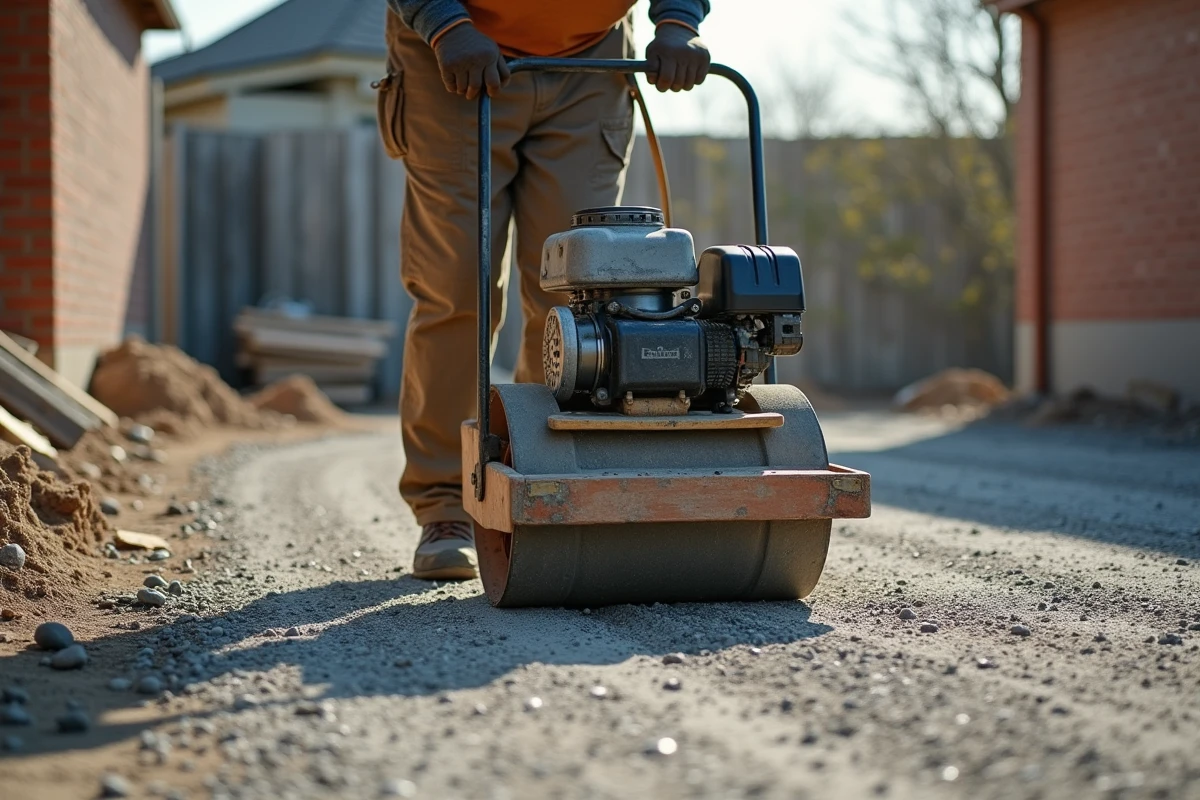
Gravel compaction is not improvised. It all starts with the choice of appropriate tools. For modest surfaces, the manual compactor remains an accessible solution: a simple weighted plate, manageable, effective for small driveways or restricted access areas. However, as the area expands, the vibrating plate becomes essential. Its motor creates a consistent vibration, forcing the soil particles to align, reducing voids and increasing density. This method ensures a homogeneous structure capable of withstanding weather conditions and repeated traffic.
For professionals working on large surfaces, the road roller complements the toolkit. This heavy equipment, available in manual or self-propelled versions, exerts continuous pressure: ideal for parking lots, roadways, and technical platforms. The combination of vibrating plate and road roller delivers uncompromising results, with each tool used at a specific stage of the process.
To clarify the choice of tool according to the site, here are the main devices used:
- Manual compactor: for occasional interventions or finishing touches.
- Vibrating plate: for the majority of private projects, ensuring the effectiveness of soil compaction.
- Road roller: for large surfaces, essential in road construction.
Adapting compaction methods, choosing the right equipment, managing layer thickness, and controlling moisture are crucial for the success of each project. Each tool corresponds to a type of gravel and a specific site configuration. Experience shows that alternating passes, both crossed and regular, optimizes cohesion, limits delayed settling, and allows for a solid base over the long term.
Practical tips to ensure a solid and durable base over time
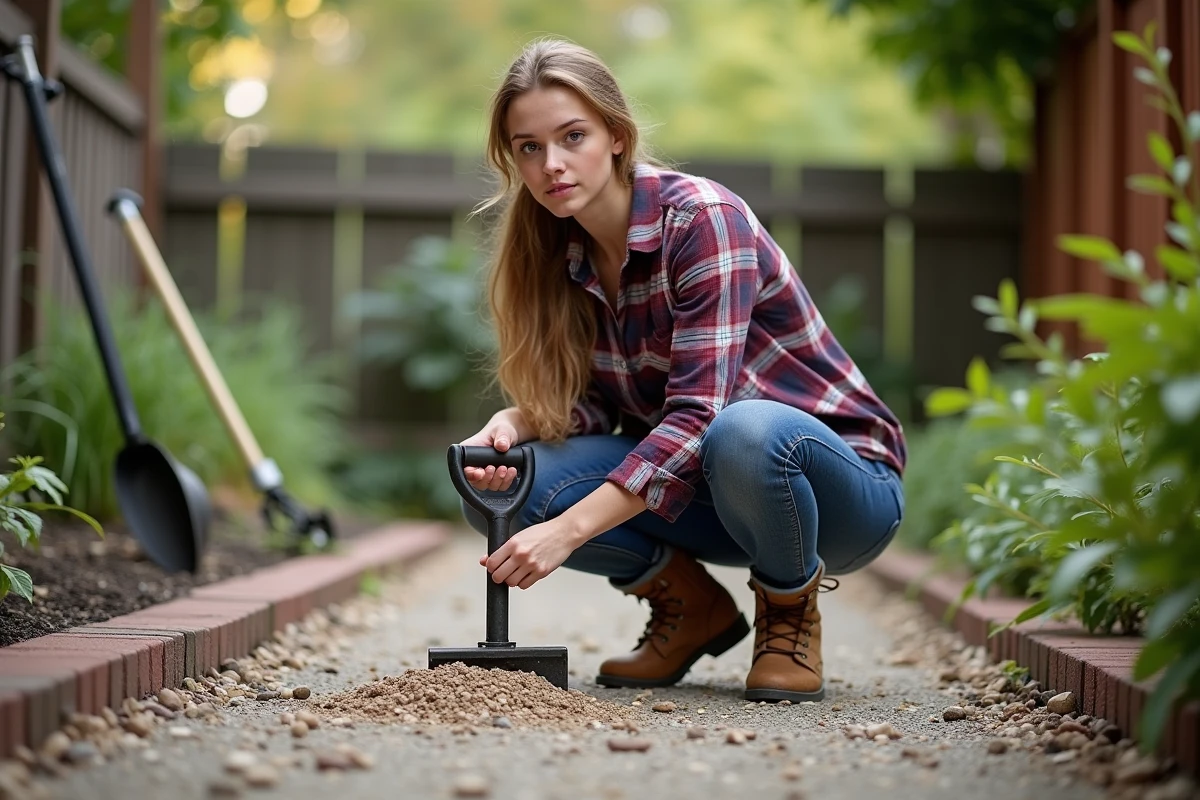
The durability of a gravel base relies on a series of precise actions, rarely left to chance. Before any intervention, check the nature of the soil: meticulous preparation ensures optimal compaction. Remove debris, level, and smooth the surface. This prior care limits future settling and promotes stability.
Managing moisture content remains critical. Soil that is too dry does not compact, while overly wet soil becomes unstable. Water moderately if necessary: the cohesion between soil and gravel particles improves, and compaction becomes more effective. In high-traffic areas, do not hesitate to layer materials in successive increments: 10 to 15 centimeters, then compact. Repeat until the desired thickness is achieved. This method, proven on sites, enhances material cohesion and prevents differential settling.
Some specific points deserve particular attention to ensure the integrity of your landscaping:
- Use natural binders if the soil’s load-bearing capacity requires it: their integration, in small proportions, stabilizes gravel without resorting to heavy chemical solutions.
- Plan for solid edges to contain the material: they prevent gravel dispersion, ensure the longevity of the surface, and facilitate maintenance.
Adapt interventions to the configuration of each project: parking areas, pedestrian paths, technical access. Each use imposes its requirements, and each surface calls for specific attention. To ensure stability and durability, prioritize rigor: compacted gravel tolerates neither approximation nor haste.
A well-compacted soil promises a landscaping project that withstands, year after year, the pressures of daily use. The difference is measured over time: surfaces without ruts, controlled drainage, unshakeable structure. Nothing spectacular, but everything that truly matters.