Interior design trends are changing rapidly, but memorable interiors share a common trait: they look unlike any other. For several seasons now, very neutral palettes and strict minimalism have been giving way to more expressive spaces, where deep colors, raw materials, and vintage objects coexist. This evolution, documented notably by Pinterest Predicts 2025 and the Houzz Design Trends 2025 reports, reflects a need for personalization that goes beyond simple visual inspiration.
Deep colors and raw materials: the foundation of an identity-driven atmosphere
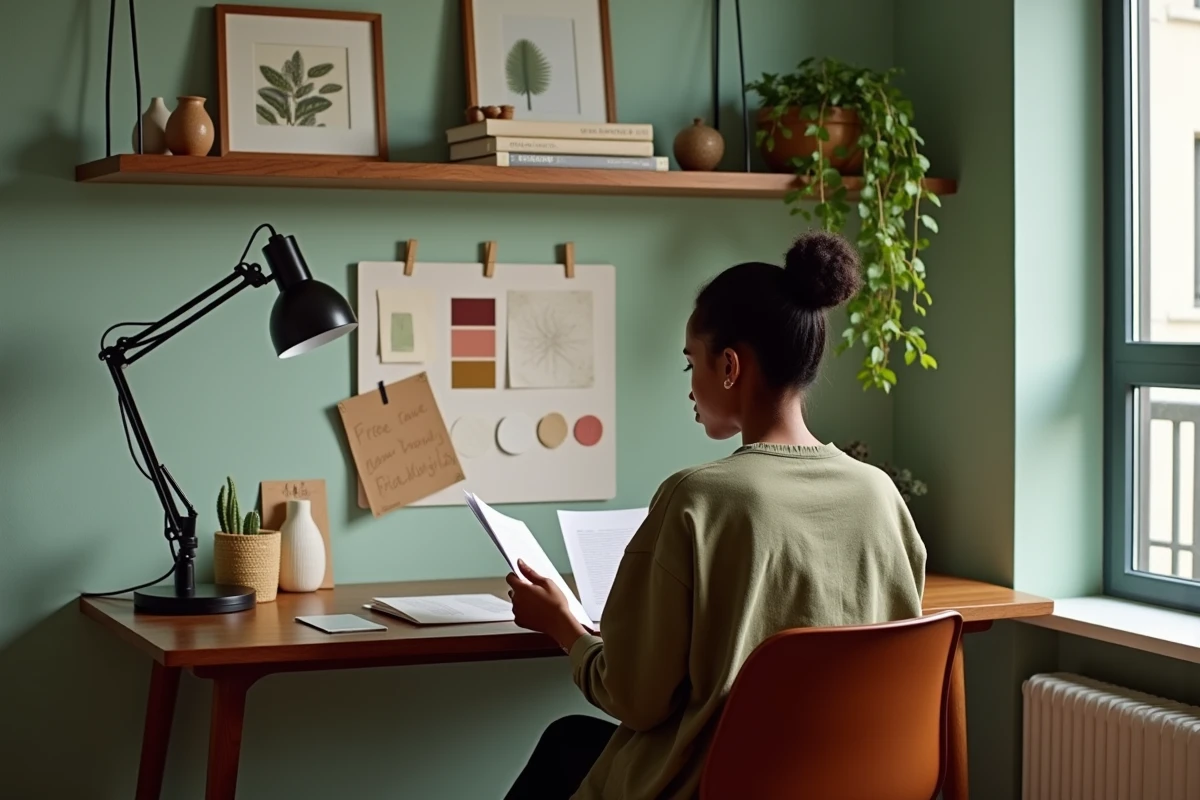
The “all-beige” era is over. The shades that are emerging today are more muted, more earthy: wine red, mocha brown, deep sage green, navy blue. Pantone has directed its color of the year 2025 towards this family of enveloping tones, and Dulux (AkzoNobel) has followed the same direction with its Colour Futures.
These colors do not work alone. They gain dimension when paired with visible and tactile natural materials: raw wood (walnut, smoked oak), stone, thick linen, boucle wool. The principle is to create a contrast of textures rather than a contrast of colors.
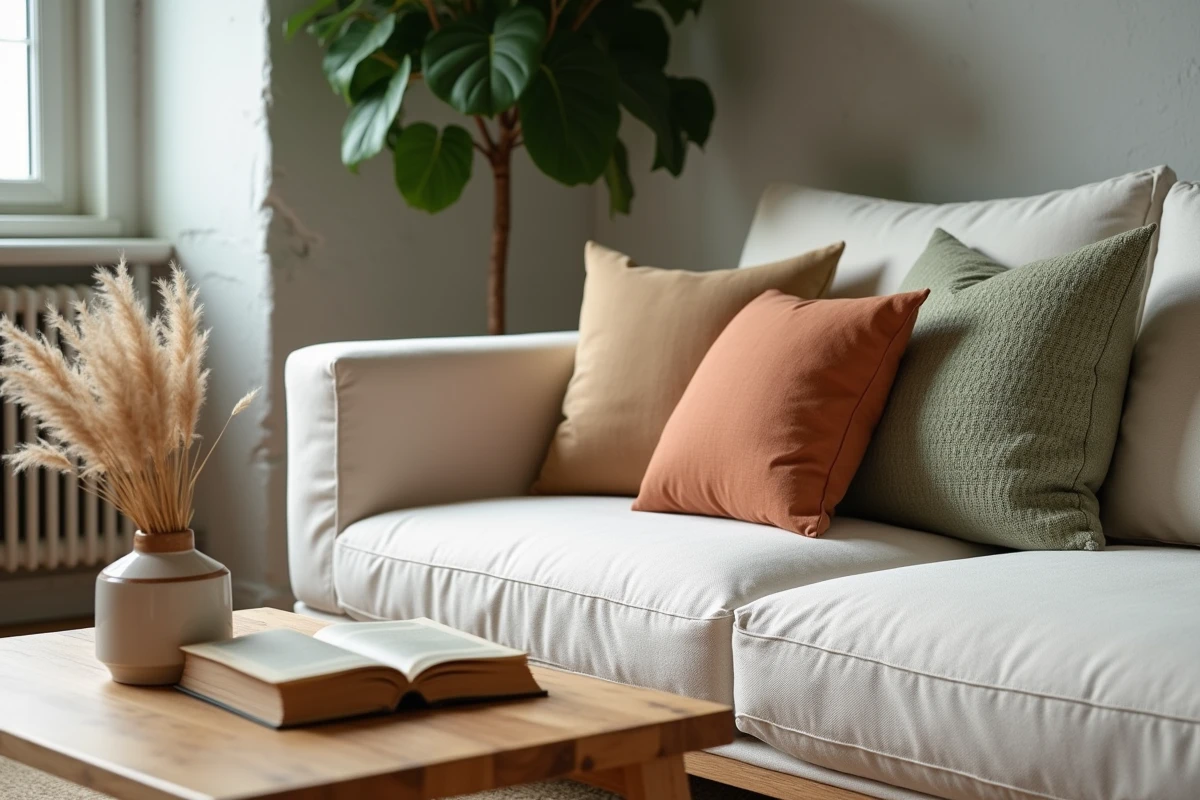
A wall painted in a muted shade, a light boucle fabric sofa, and a dark wood coffee table are enough to set an atmosphere without resorting to a multitude of accessories. Browsing C Ma Déco’s decor selection allows you to spot pieces that fit this logic of coherent materials and tones.
Furniture with organic lines: how the choice of shapes changes a living room
Straight lines and sharp angles are giving way to curves. Sofas with rounded arms, enveloping armchairs, tables with curved edges: furniture with organic lines redefines the flow in the room. A curved piece breaks the rigidity of a rectangular layout and creates more fluid passage areas.
This is not just an aesthetic issue. An armchair with a rounded back invites a different way of sitting compared to a cubic armchair. The low and deep seat, very present in recent collections, alters posture and thus the use of the living room: less formal, more conducive to long relaxation.
Combining curves and straight elements
An entirely curved interior can lack structure. Balance comes from a few straight elements that anchor the decor:
- A wall shelf with straight black metal or light wood supports, placed behind a rounded sofa
- A pendant light with a thin vertical stem, creating a reference line above a round table
- A rectangular rug under a set of curved furniture, to delineate the area without partitioning it
The mix of geometries avoids the “showroom” effect where everything seems to come from the same catalog.
Controlled maximalism: personalizing without overwhelming
The return of maximalism, confirmed by Pinterest Predicts 2025 data, does not mean accumulating without logic. The most accomplished interiors in this vein follow an implicit rule: every displayed object tells something about the inhabitant.
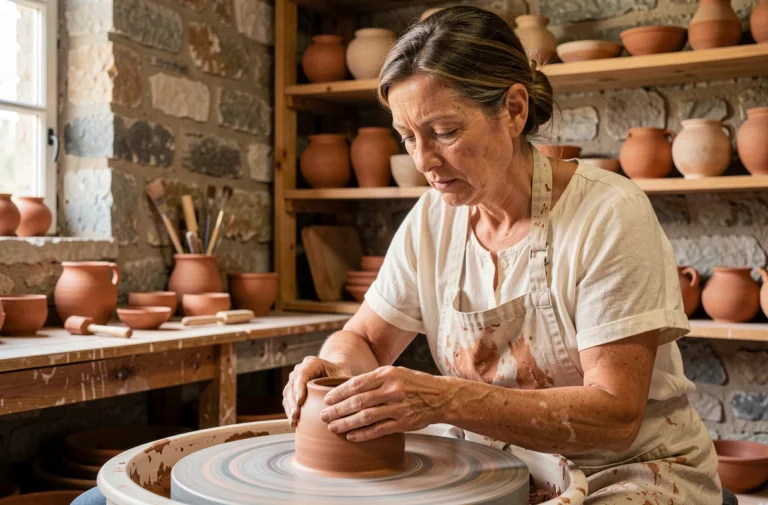
In practical terms, this translates into an unapologetic mix of styles and eras. A handmade ceramic vase on a designer console, a framed vintage poster in a contemporary living room, a vintage mirror leaning against a polished concrete wall. Cohesion does not come from a single style but from a common color palette or a material thread (brass, dark wood, smoked glass).
Upcycling and second-hand pieces
Personalization also comes from furniture that cannot be found anywhere else. The growing interest in upcycling and second-hand purchases, documented by the Houzz & Home Study 2025, goes beyond simple ecological arguments. A vintage piece that has been refurbished becomes a signature element that no one else owns.
Repainting a vintage dresser in a deep tone, replacing the handles with brushed brass, or reusing old floorboards as a headboard: these interventions require little budget but create a decor that is impossible to reproduce identically.
Personalized decor room by room: going beyond the living room
The majority of content on interior decoration focuses on the living room. However, field feedback shows that personalization is spreading to secondary rooms, where it has the most impact on a daily basis.
- The entryway: a raw wood bench, a round mirror, and a metal wall hook are enough to create an identity right at the threshold
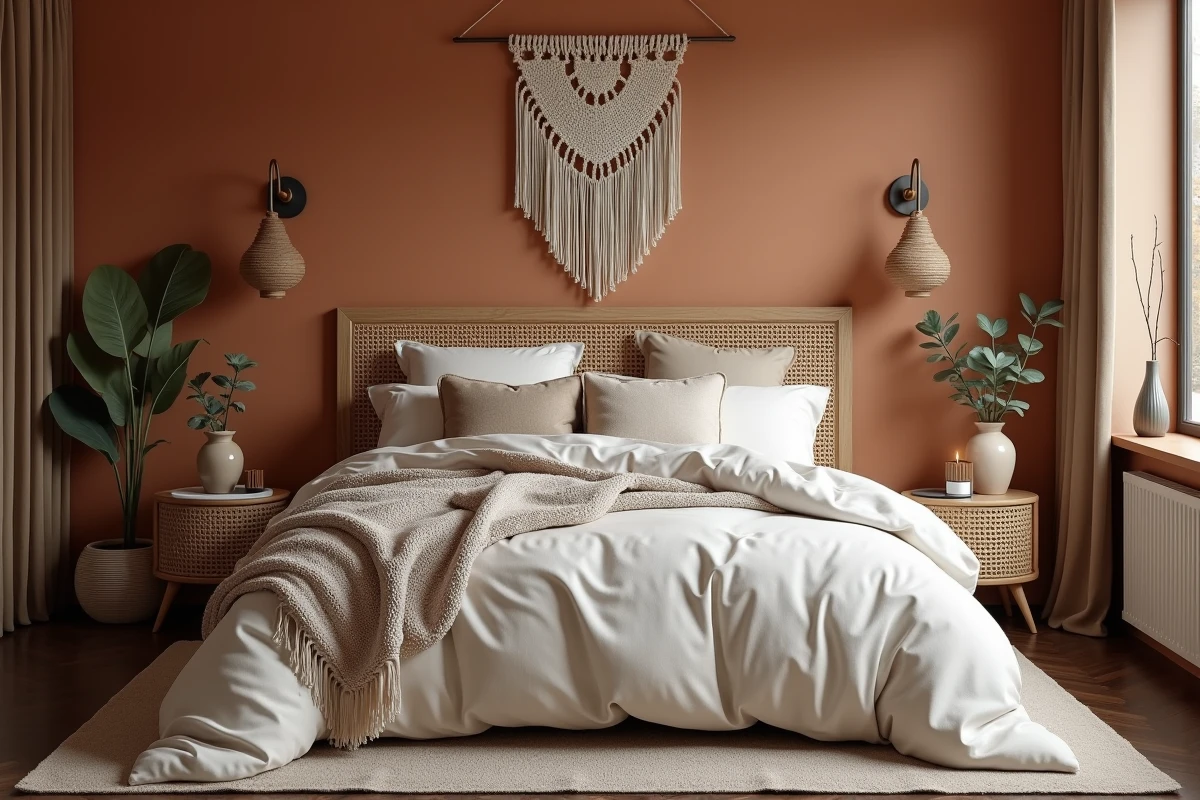
- The bedroom: textiles (washed linen, textured cotton) and a bedside lamp chosen as a decorative object in its own right transform the atmosphere more surely than a change in wall color
- The bathroom: replacing standard accessories (soap dish, dispenser, mirror) with pieces in stoneware, wood, or blown glass is enough to break the functional look
Adapting the decor to the actual use of each room avoids “Instagram” interiors that do not hold up beyond the photo.
Current trends converge towards the same conclusion: the most sustainable decoration is one that starts from lifestyle habits, not from an idealized image. Deep colors, curved shapes, and the mix of new and vintage objects are not passing fads; they reflect a way of thinking about the interior as an extension of oneself rather than as a showcase.