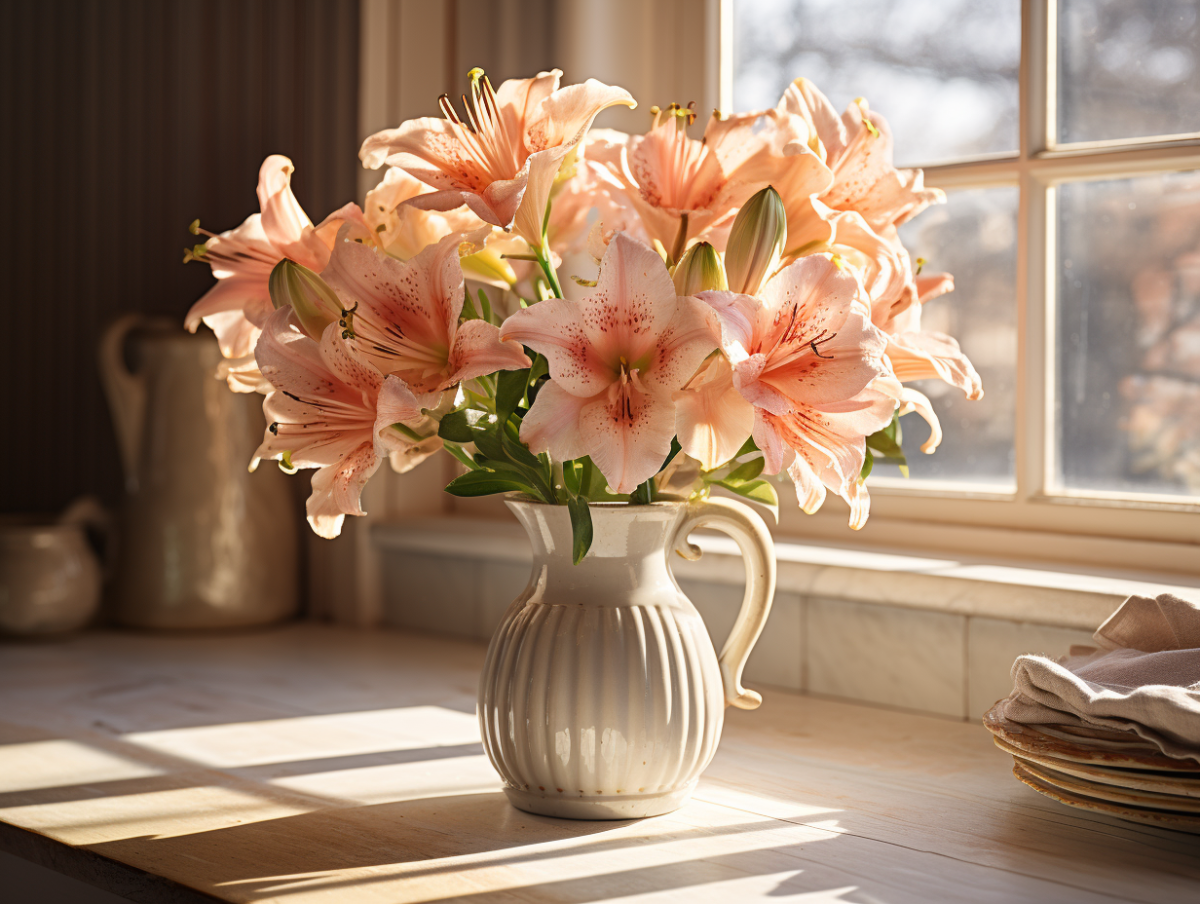
Lily pollen is known for its ability to leave stubborn stains and emit a strong scent that can become overwhelming. Enthusiasts of these sumptuous flowers often seek effective methods to avoid these inconveniences without sacrificing the beauty of their bouquets. Whether through preventive tips or cleaning techniques, there are practical solutions to minimize the undesirable impacts of lily pollen. These tips are especially valuable during special events, such as weddings or receptions, where lilies are often celebrated for their elegance.
Preventing Odors and Stains from Lily Pollen
Discover how to enjoy lilies without the drawbacks of their fragrance and pollen. Preventing stains and managing odors starts with the careful selection of varieties. Asian lilies are an attractive option as they are naturally odorless and offer a variety of colors while maintaining the distinctive elegance of lilies. Double-flower lilies, often derived from oriental varieties, have the advantage of not producing pollen, thus eliminating the risk of stains and allergic reactions.
For varieties that produce pollen, proper handling is essential. Remove the stamens as soon as the flowers bloom to prevent the pollen from dispersing. This simple precaution helps maintain the beauty of the lilies while protecting surrounding surfaces. Regarding lily care, specific maintenance should be applied: place the flowers in a cool environment away from drafts to preserve their freshness and limit pollen volatility.
As for scents, the strategic arrangement of bouquets can play a key role. Position the lilies so that their distinctive fragrance does not become overwhelming, keeping them away from dining or relaxation areas. If the scent remains a concern, opt for regular ventilation of the rooms or use low-scent varieties. You can enjoy the beauty of lilies, these floral icons, without compromising your olfactory comfort and the cleanliness of your spaces.
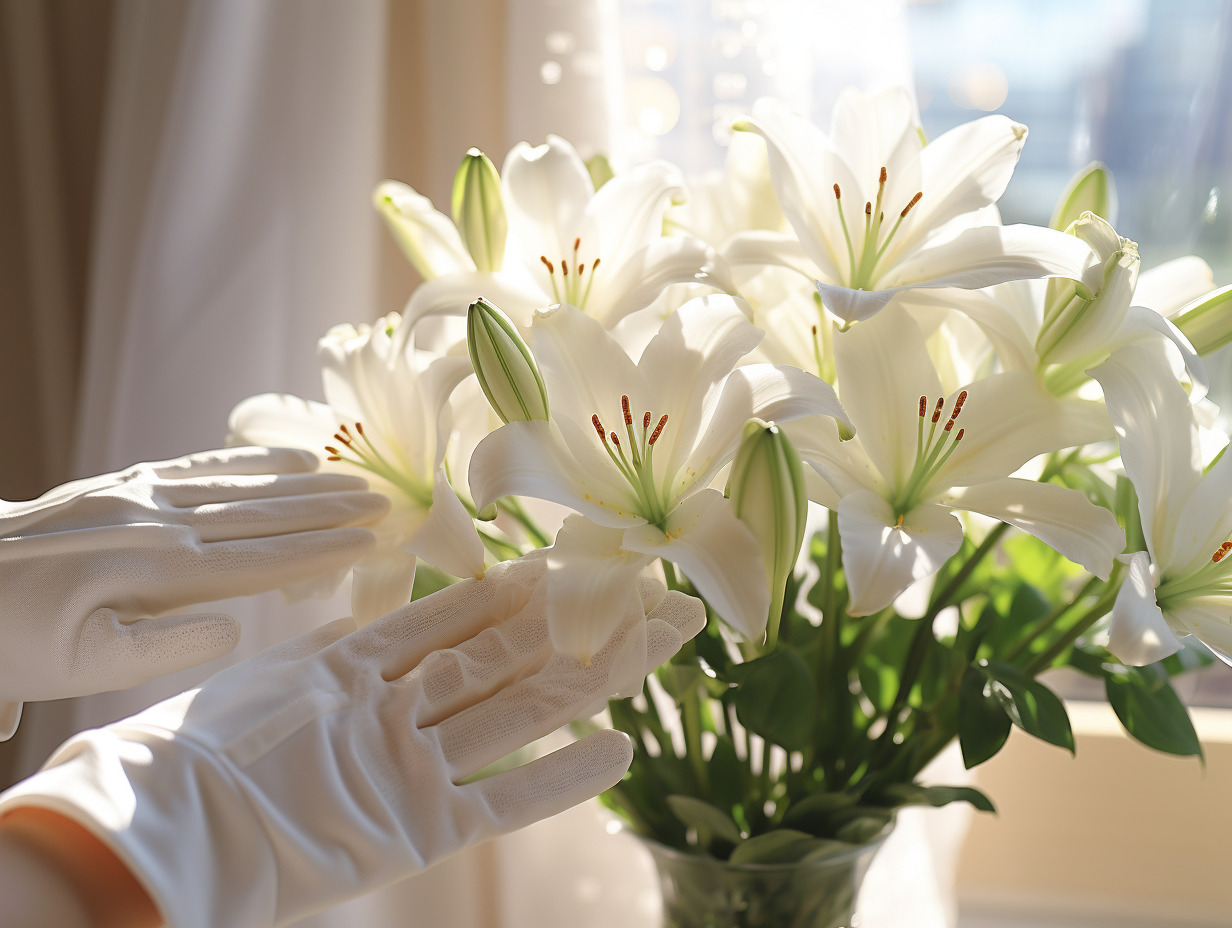
Effective Techniques for Removing Pollen Stains
Lily pollen, although natural, is a feared enemy of light fabrics and surfaces. In the face of this scourge, florists offer proven techniques to tackle stubborn stains. When a pollen stain appears, the first instinct is to gently dab it with adhesive tape to lift the grains without crushing them. This method, far from intuitive, is effective in preserving the texture and color of the affected fabric.
If the pollen has been pressed and the stain has set, one solution is to use specific cleaning agents. Absorbent powders can be sprinkled on the stain, such as talcum powder or cornstarch, to absorb the grease contained in the pollen. After a resting period, gentle brushing will help remove the residues without damaging the fabric.
For more stubborn stains, using 90° alcohol may be necessary. Apply the alcohol to a clean cloth and dab the affected area. Then, rinse with clear water before proceeding with the usual wash. This method can help dissolve the pigments in the pollen and restore cleanliness to the item.
As a last resort, when the previous techniques are insufficient, consult a cleaning professional. Dry cleaners have solvents and specific methods to treat stains from organic substances such as pollen. Professional treatment often guarantees optimal results, thus preserving the longevity and aesthetics of textiles and surfaces affected by the whims of lilies.